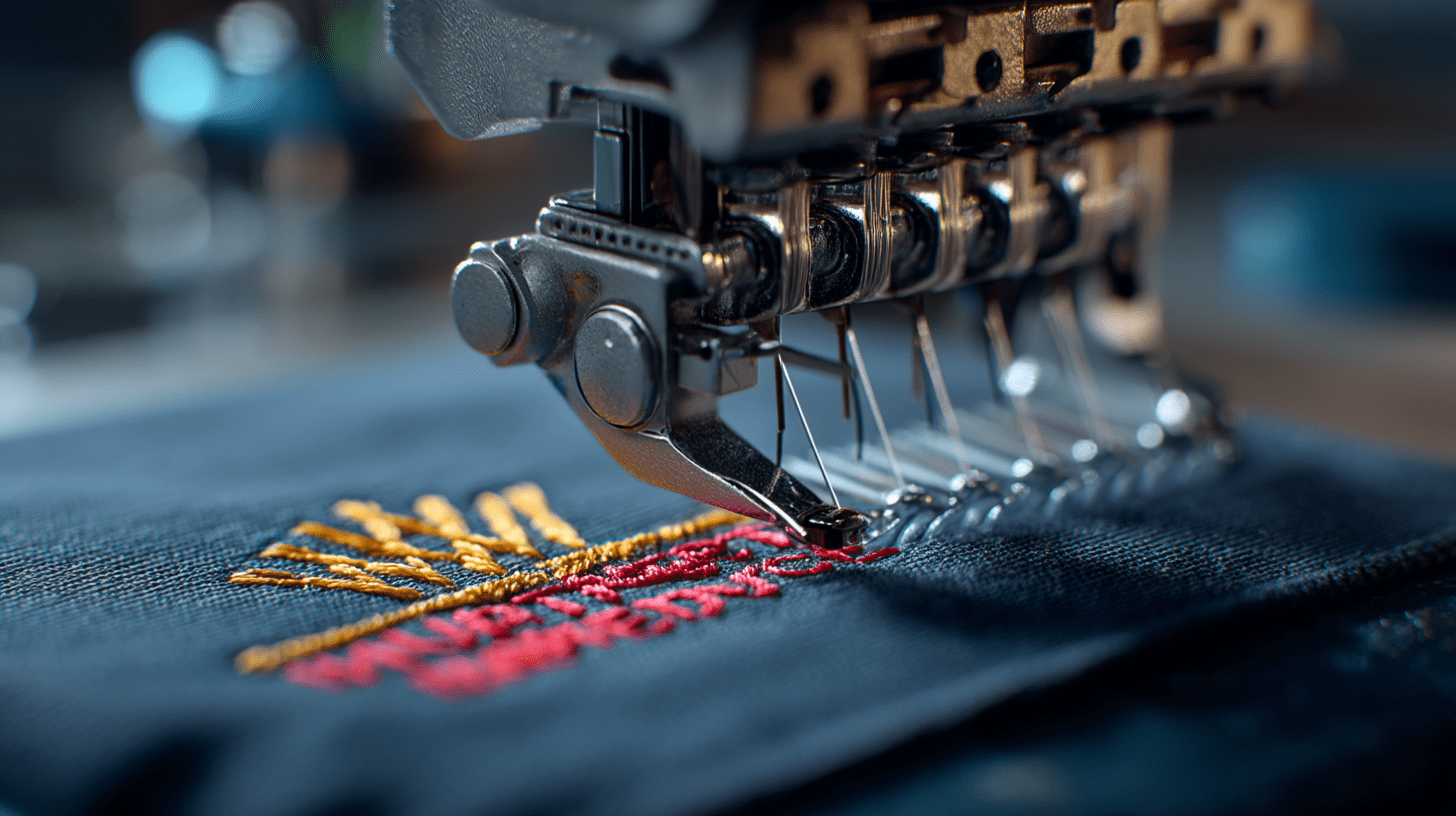
The logo looks perfect on-screen. Then the embroidery proof arrives.
The tagline resembles a dotted line. A border has vanished. Two shapes now touch. Pixels have stopped behaving like thread.
Most logos can be embroidered or adapted, but the result depends on finished size, lettering, line thickness, spacing, color effects, garment, placement, and digitizing. Judge the logo at its actual stitched size, then simplify only what cannot survive.
- Small text, hairline strokes, tight gaps, and soft effects need the closest review.
- A vector file helps with editing, but it does not replace digitizing.
- A logo that works large may fail at left-chest or cap size.
- The garment and an approved proof matter as much as the artwork.
Quick Logo Embroidery Suitability Table
| Logo detail | What may happen | Practical response |
| Tiny text | Letters close or blur | Enlarge, bold, shorten, or remove |
| Thin outlines | Lines break or disappear | Increase stroke weight |
| Narrow gaps | Elements merge | Open the negative space |
| Gradients or shadows | Soft effects become hard bands | Simplify or change methods |
| Dense small details | The design looks muddy | Create a compact version |
| Unstable fabric | Edges shift, sink, or pucker | Adjust the setup or garment |
Before choosing an item, compare the artwork with available company logo and uniform embroidery options.
Is My Logo Suitable for Embroidery? Use the S.T.I.T.C.H. Check
- Size: Will every element remain clear at the intended width?
- Text: Are the letters open, bold, and properly spaced?
- Intricate detail: Could any line, texture, or shape disappear?
- Tones: Does the artwork depend on gradients or transparency?
- Clear spacing: Is there room between neighboring elements?
- How the fabric behaves: Will the material stretch, sink, curve, or shift?
1. Small Text Can Close Before Anyone Can Read It
Thread has physical width. The inner spaces of letters such as “a,” “e,” “o,” and “R” can fill, while fine serifs and tight spacing may disappear.
There is no universal minimum for every font and fabric. As a practical guideline, Melco recommends a minimum letter height of 0.25 inch for pique polos and finished hats, while noting that bold block lettering works more reliably than thin script.
The question is whether the text remains readable at the chosen size and on the chosen material. A tagline may need a heavier font, more spacing, or removal.
2. Thin Lines Can Break, Sink, or Disappear
A hairline may look elegant in an AI, EPS, SVG, or PDF file but be too narrow to form a stable stitched line.
Thin outlines can break around curves or sink into fleece. A digitizer may thicken the stroke, simplify the curve, or select another stitch type. Always check the artwork at its intended physical size.
This guide to embroidery versus screen printing can help when the decoration method is still undecided.
3. Tight Gaps Can Close and Separate Shapes Can Merge
Negative space is the open area inside or between design elements.
Stitching pulls thread against fabric. Nearby elements can spread until a gap disappears, especially in small shields, gears, monograms, and layered emblems.
Digitizers plan for movement with underlay, stitch direction, sequencing, spacing, and push-pull compensation. The supplied training material compares digitizing to building a house: underlay forms the foundation, connections create an efficient path, and fill or satin stitches build the visible structure.
Digitizing can manage movement, but a narrow gap still requires an artwork change.
4. Gradients, Shadows, and Transparency Need a New Plan
A screen blends tiny color transitions. Embroidery works with physical thread areas.
A gradient may become solid color steps. A faint shadow may turn into a heavy border.
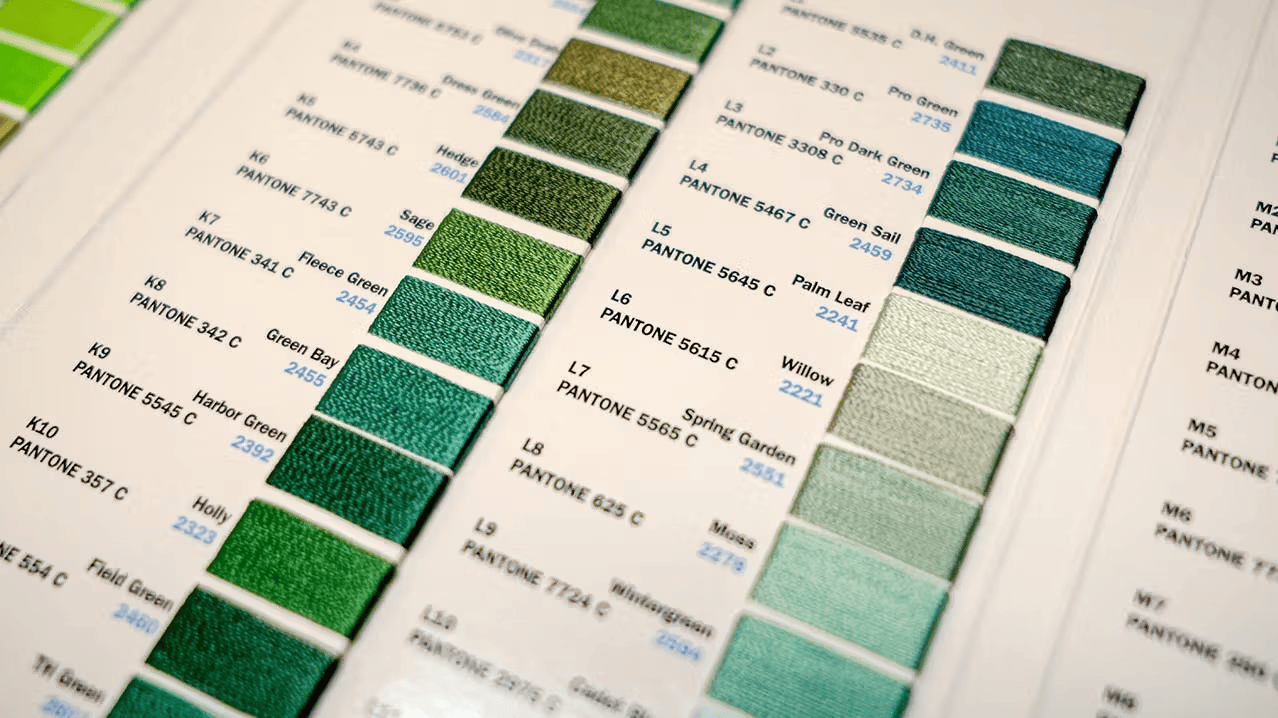
Pantone references communicate brand intent, but thread ranges contain fewer shades. When no exact match exists, the closest physical thread color may be recommended.
DTF may preserve photographic detail more closely, while a patch can provide a stable base for a complex emblem.
5. A Detailed Logo May Work Large and Fail Small
A jacket-back design has room to breathe. A left-chest logo or cap design does not.
Crests, seals, mascots, and illustrated marks may contain too much information for a compact placement. Shrinking the stitch file can create crowded outlines and unreadable text.
As Steve Jobs put it, “Design is not just what it looks like and feels like. Design is how it works.”
That may mean removing a date, using the icon without the tagline, reducing borders, or simplifying facial details. Preserve recognition, not every pixel.
Do This, Not That
| Do this | Not that |
| Test the final stitched size | Approve enlarged artwork |
| Strengthen fragile lines | Keep hairline strokes unchanged |
| Widen narrow openings | Expect digitizing to invent space |
| Create a compact logo lockup | Force every detail onto a cap |
| Match the file to the garment | Reuse one file without review |
6. Fabric and Placement Can Change the Same Logo
Smooth woven fabric behaves differently from pique knit, fleece, performance polyester, or a structured cap. Fleece can hide fine stitches. Stretch fabric can shift. A cap adds curvature and seams.
Backing and stabilizer control movement, while zippers, pockets, and thick panels can limit placement.
Review the logo with the item, size, and location already chosen. The site’s customer reviews and project feedback provide further examples across business apparel and personalized items.
A Familiar Real-World Scenario
Consider a construction logo with a shield, thin roofline, small founding year, and gray shadow.
At cap size, the year closes, the roofline breaks, and the shadow crowds the name. A compact version removes the year, strengthens the roofline, opens the spacing, and drops the shadow.
The identity remains. The clutter does not.
This is a composite scenario, not a specific customer project.
Do I Need a Vector Logo for Embroidery?
A vector file helps, but it is not a machine-ready embroidery file.
AI, EPS, SVG, and many PDF files contain editable shapes. A clear PNG or JPEG may need cleanup or redrawing.
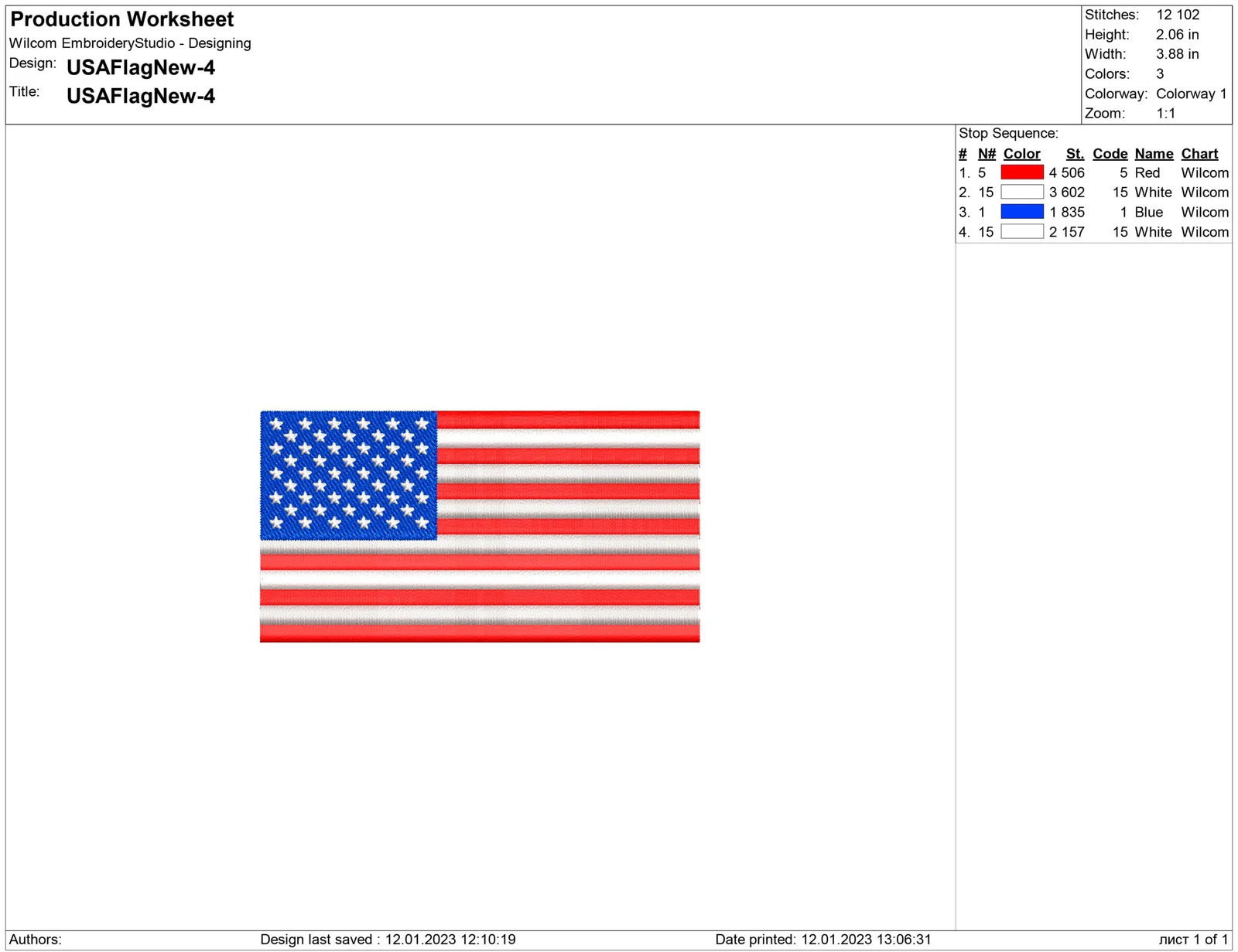
Digitizing translates artwork into instructions for stitch type, direction, density, underlay, order, trims, and colors. Machine files may include DST, PES, and EXP. Brother’s documentation separates image and vector imports from embroidery formats and lists these stitch-file types for conversion or machine use.
The source file shows what the logo should look like. The stitch file tells the machine how to build it.
What Should Happen Before Production?
- Send the clearest source artwork.
- Confirm the item, quantity, placement, size, colors, and deadline.
- Review changes to text, lines, spacing, or effects.
- Check an embroidery proof or sample sew-out.
- Approve the design before the full order is stitched.
A proof shows layout and scale. A sew-out also reveals how thread, backing, fabric, and tension behave together.
When Is Embroidery Not the Best Choice?
Another method may be better when artwork depends on photographic realism, smooth gradients, tiny text, distressed speckles, faint shadows, or a large dense background.
DTF may suit colorful detail. Screen printing may suit large repeated graphics. A patch may help when the surface or design complexity makes direct embroidery less practical.
Ready to Find Out Whether the Logo Is Embroidery-Ready?
GoldenWorks Embroidery reviews artwork for branded apparel, uniforms, hats, polos, jackets, bags, and promotional products in the Kansas City area and beyond.
To upload your logo for review, include the item, quantity, placement, approximate size, colors, and deadline. Call +1 913 667-9827 or email info@goldenworksembroidery.com.
Important Before Ordering
Embroidery suitability cannot be confirmed from the logo file alone. The result also depends on size, material, placement, thread, stabilizer, stitch settings, and production method.
Fine lettering, narrow gaps, gradients, shadows, and intricate details may need enlargement, simplification, or removal. Thread may approximate brand colors without matching every screen color exactly.
Submitting artwork or requesting a quote does not guarantee an unchanged design. Production should begin only after approval of the design, size, placement, and colors.
Customers supplying garments should review policies for item condition, replacements, artwork rights, revisions, proofs, turnaround, and post-approval changes.
Conclusion: Is My Logo Suitable for Embroidery?
The strongest embroidered logo is not the one that keeps every pixel. It is the one that keeps the identity clear after pixels become thread.
Check the size, text, detail, tones, spacing, and fabric. Approve the design where it will be worn to prevent blurred lettering, missing lines, and crowded shapes.
FAQs
Most logos can be embroidered or adapted. Size, detail, fabric, placement, and digitizing determine the result.
What Makes a Logo Embroidery-Ready?
Bold shapes, readable lettering, clear gaps, and solid color areas usually translate most cleanly.
How Can I Tell Whether My Logo Is Too Detailed?
View it at the intended size. If text, gaps, and outlines become hard to distinguish, simplify it.
Can Embroidery Reproduce Gradients and Shadows?
It can suggest them with stitch direction or stepped colors, but not every smooth digital transition.
Can Metallic Effects Be Embroidered?
Metallic thread adds shine, but it does not copy a digital metallic effect exactly.
Can a Photograph Be Converted Into Embroidery?
It can be interpreted as stitch art, but it will not reproduce like a printed photograph.
Send the clearest original file. Vector artwork helps, but a high-quality PNG or JPEG can also be reviewed.
Does the Embroidery Team Digitize Customer Logos?
Yes. The process includes digitizing, design review, approval, production, and quality inspection.
Yes. Customers can provide suitable blanks or request garment sourcing with the quote.
One Response
https://shorturl.fm/vtzEn